


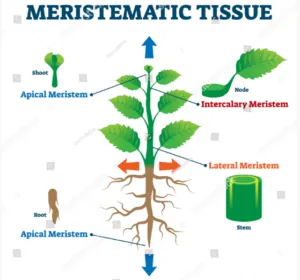
Pinching is a horticultural tool that can be used to influence plant architecture, branching, flowering and overall crop development. By removing the growing tip, the dominance of the main shoot is removed, changing the hormonal balance of the plant and encouraging the development of more side branches.
Understanding how and when to use pinching is important, as the response can affect not only branching but also flowering time, crop uniformity and the final plant habit.
What Does Pinching Do?
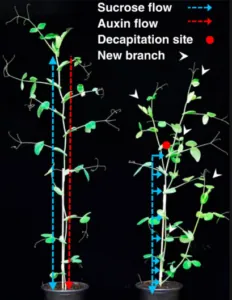
The main physiological sequence is straightforward: the growing tip is removed, the dominance of the main shoot is reduced, the hormonal balance changes, and more side branches can develop.
From a production perspective, pinching can encourage branching and create more flowering stems. It can also reduce stretching and help maintain a compact habit, and in some situations it can improve crop uniformity or help maintain vegetative growth. At the same time, pinching may delay flowering.
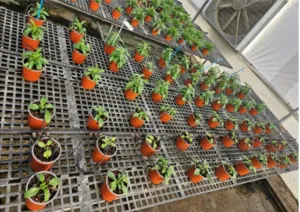
Pinching can also be carried out using a machine, as demonstrated in commercial production.
The Risks to Consider
Pinching is not without risks. Possible effects include uneven or non-uniform growth, delayed flowering and temporary plant stress. The wounds created during pinching may provide an entry point for fungal, bacterial or other diseases, while handling can also contribute to the spread of pathogens.
The practice may also increase labor requirements and overall production costs.
Salvia SALLYFUN™: Pinched vs. Unpinched
A Danziger trial was conducted to evaluate differences in growth between two agrotechnical methods in the SALLYFUN™ collection. The trial consisted of two groups: three plants were subjected to pinching and three plants were left unpinched. All other growing conditions were kept consistent across both groups. The trial was conducted at the Danziger site in 2026.

The first comparison was documented on March 8, 2026, immediately after pinching was carried out.
Ten days after pinching – March 18: the unpinched plants were bigger and appeared close to flowering. The pinched plants were smaller and had developed up to four branches.
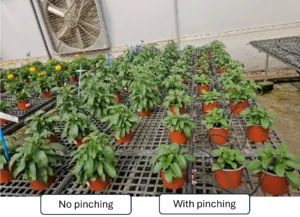
Two weeks after pinching – March 22: the unpinched plants were starting to bloom. There were no observed problems with vegetative growth, and the plants filled the pot nicely. The pinched plants remained smaller; their branches had developed further, but pinching had caused a delay in flowering.
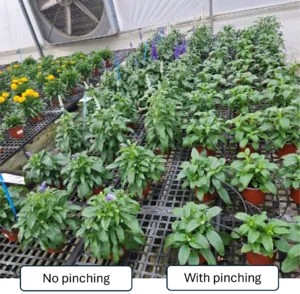
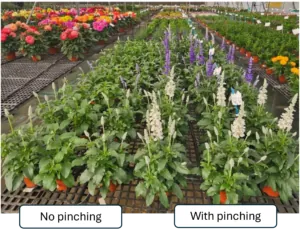
Three weeks after pinching – March 30: the unpinched plants were very close to full bloom. The main stem carried a large bloom, while additional blooms were developing from the side shoots. The pinched plants remained delayed, with blooms developing on each side shoot. Vegetatively, the plants looked similar.
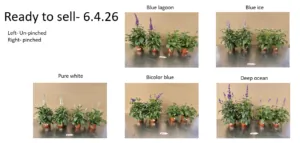
By April 6, 2026, the plants had reached the ready-to-sell stage. Comparisons between unpinched plants on the left and pinched plants on the right were documented for Blue Lagoon, Blue Ice, Pure White, Bicolor Blue and Deep Ocean.
Disclamer :The SALLYFUN™ data are based on a single observation in Israel and cannot be relied upon. The information is marked for internal use only and may not be disclosed to other parties.
Mimulus MAI-TAI™: Testing the Influence of Pinching
A second Danziger trial examined the influence of pinching on Mimulus MAI-TAI™.
The production process was:
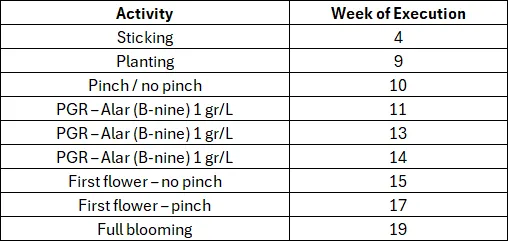
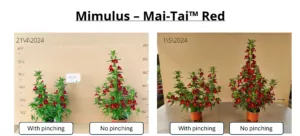
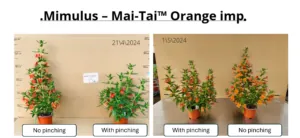
The trial therefore showed a difference in first-flower timing: the unpinched plants reached first flower in week 15, while the pinched plants reached first flower in week 17. Side-by-side comparisons were documented for MAI-TAI™ Red and MAI-TAI™ Orange Imp., comparing pinched and unpinched plants on April 21, 2024 and again on May 1, 2024
Examples from Commercial Production
Commercial production also demonstrates the importance of where and how the pinch is made.
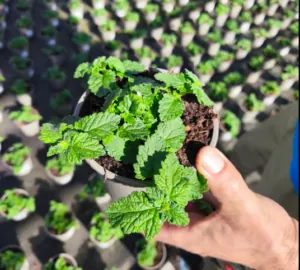
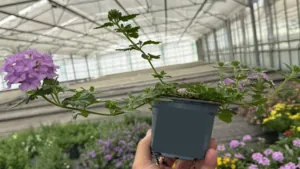
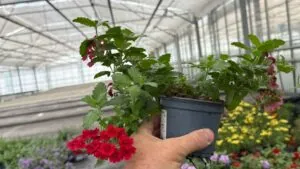
In Verbena pinched as a young plant in the tray, a low pinch resulted in the side shoots completely dominating the plant, creating what was described as a non-“harmonic” plant habit. Here are examples demonstrate the result of a pinch that was made too low.
Pinching as a Crop-Management Tool
Pinching can be a valuable tool when used wisely. Like PGR, fertilization and irrigation, it can be used to program and fine-tune a crop.
The key is understanding both the desired response and the potential consequences: branching, flowering stems, compactness and crop uniformity need to be considered alongside flowering delay, plant stress, disease risk, labor and production costs.
RELATED POSTS