


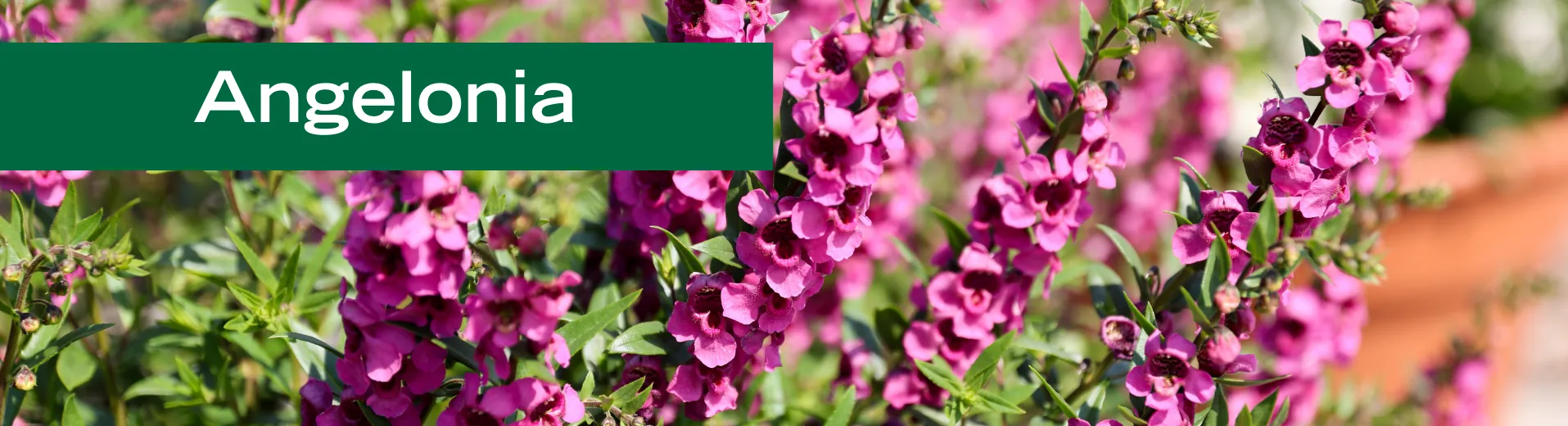
Angelonia angustifolia
Growing Guide, Production Protocols, and Danziger Series Overview
Cultivation & Growing Guidelines
Angelonia angustifolia, often called ‘summer snapdragon’, is part of the Plantaginaceae family and is admired for its upright spikes of fragrant, snapdragon-like flowers that thrive in summer heat. Preferring full sun, well-drained soil, and moderate fertility, Angelonia is heat and drought tolerant, making it an excellent choice for low-maintenance garden beds, patio pots, and mixed combinations. Continuous flowering and strong branching provide vibrant color all season long without the need for deadheading.
Stick cuttings immediately and remove from mist as soon as possible. Maintain 70°–72°F (21°–22°C) early, then cool to 68°–70°F (20°–21°C). Keep pH 5.8–6.2, EC 0.8–1.2, feed 50 ppm N then 100–150 ppm N. Apply fungicide at sticking and week 2, and Daminozide 1,200–1,500 ppm to control stretch. Pinch at week 4 or transplant for best branching.
For more detailed growing tips – such as sticking guidelines, recommended PGRs, and scheduling protocols – check out our Angelonia Growing Tips.
Commercial Angelonia Series Overview
Danziger offers one dedicated series within this crop:
- ALONIA™
Danziger’s ALONIA™ series combines uniform growth, vivid color options, and outstanding garden durability. Its well-branched, upright habit is perfect for premium pots and landscape plantings, delivering long-lasting blooms that stay fresh even under extreme summer conditions.
For detailed culture tips, including rooting guidelines and PGR strategies, visit our product pages.